
Artificial vs. Real Plants for the Workplace: A Complete Guide

 Read time: 5mins
- Share
- Real plants enhance employee well-being and productivity but require regular care
- Artificial plants can add greenery to spaces where live plants aren’t practical
- A mixed approach can bring health benefits, aesthetics, and practicality for any area
Choosing between real and artificial plants for your workplace involves weighing various factors from well-being to maintenance and budget. Your selection is ultimately a reflection of your company’s priorities, whether it’s staff wellness, aesthetic consistency, or sustainability. Here is a complete guide to help you make an informed decision.
The power of real plants
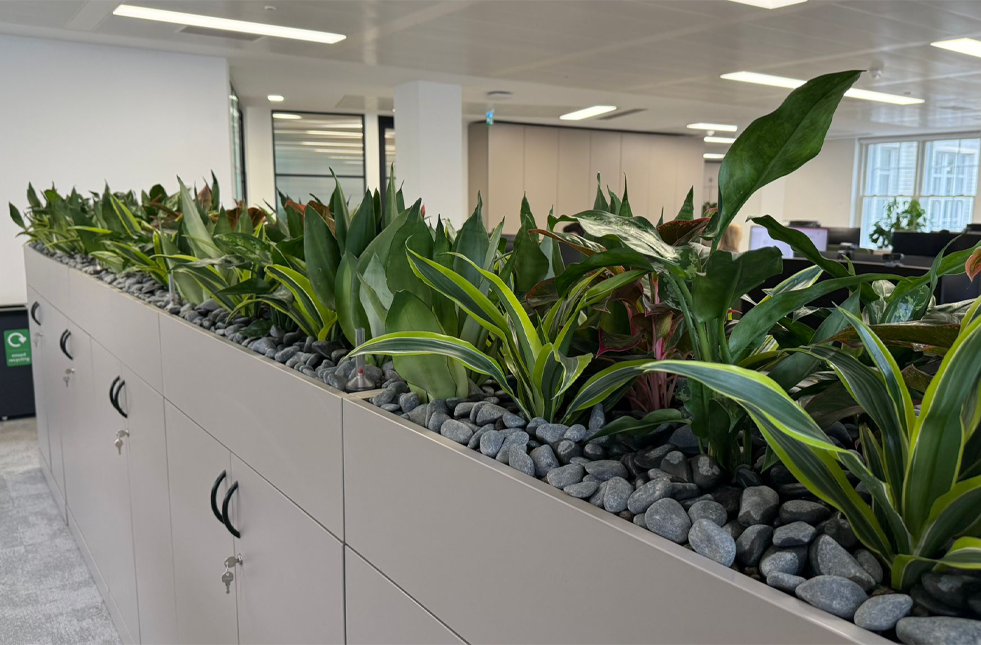
Real, or “live”, plants are a cornerstone of biophilic design, which aims to connect people with nature in indoor environments. This connection brings numerous proven benefits that artificial plants simply cannot replicate.
The research makes a compelling case as The Human Spaces report shows that greenery reduces stress, boosts mood, and can increase employee well-being by up to 47% and productivity by 6%. Furthermore, plants are natural air filters. Through photosynthesis, they absorb carbon dioxide and release oxygen. Certain species actively filter common indoor air toxins, known as Volatile Organic Compounds (VOCs), and help naturally regulate humidity.
Beyond the science, real plants possess a natural beauty, variety, and dynamic quality, such as growing and changing leaves, that provides an authentic touch that cannot fully replicate.
However, the main drawback of real plants is their high maintenance. They require regular watering, pruning, feeding, and leaf cleaning, which Inleaf provides as part of a maintenance scheme.
Real plants also need sufficient natural light, meaning they may not survive if your office has few windows or deep interior spaces. Finally, due to temperature changes and seasonal variations in offices, some plants may wilt, drop leaves, or occasionally die before a maintenance team can replace them, leading to an inconsistent appearance.
The Convenience of Artificial Plants
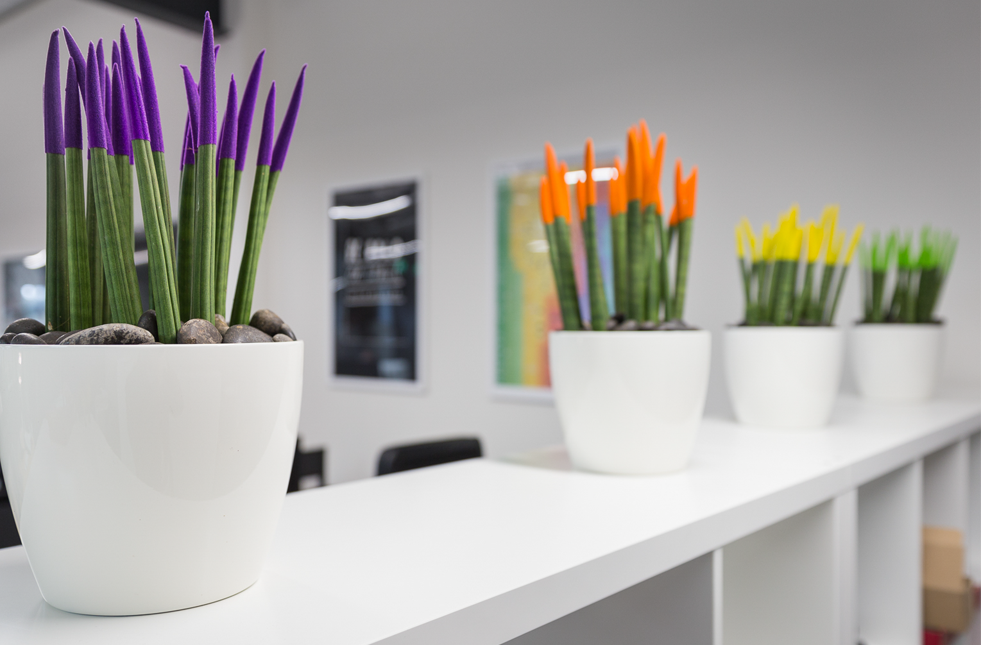
High-quality artificial plants offer a low-maintenance alternative for workplaces where live plants may be impractical. They require no watering, feeding, pruning, or natural light, making them well suited to areas with limited sunlight, fluctuating temperatures, or restricted access.
Their durability makes artificial plants particularly useful in high-traffic locations such as reception areas, corridors, retail spaces, or waiting rooms, where consistency of appearance is important and the risk of accidental damage is higher. They are also suitable for environments where pollen may be a concern, such as healthcare settings or offices with allergy-sensitive occupants.
The limitations of artificial plants stem from their inert nature. While they provide visual greenery, they do not offer the air quality or well-being benefits associated with living plants. From a sustainability perspective, artificial plants are typically manufactured from synthetic materials, although their long lifespan can offset the need for frequent replacement when compared to poorly maintained live plants.
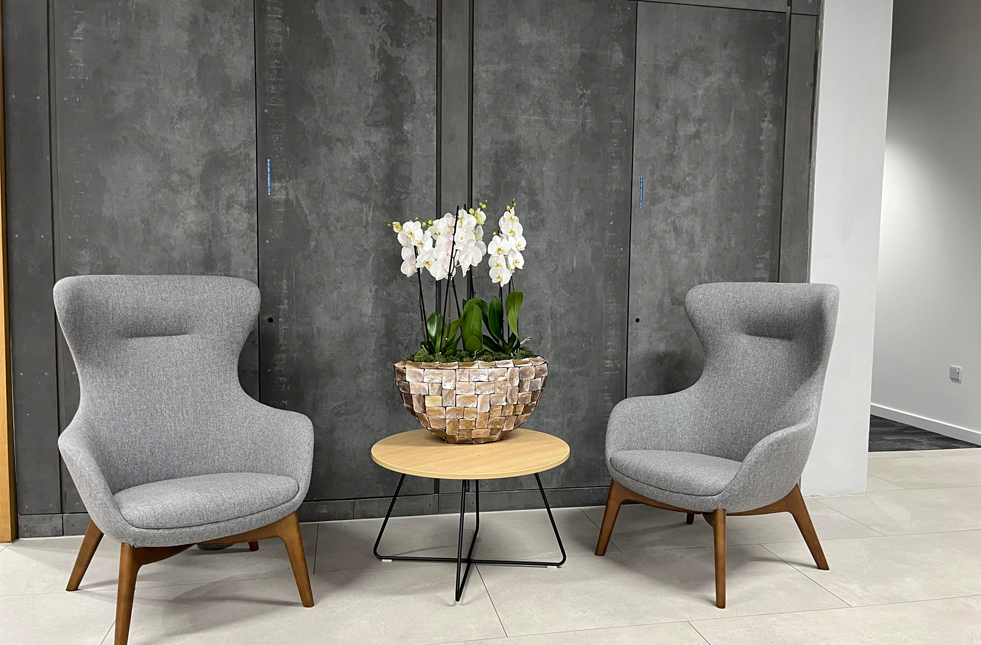
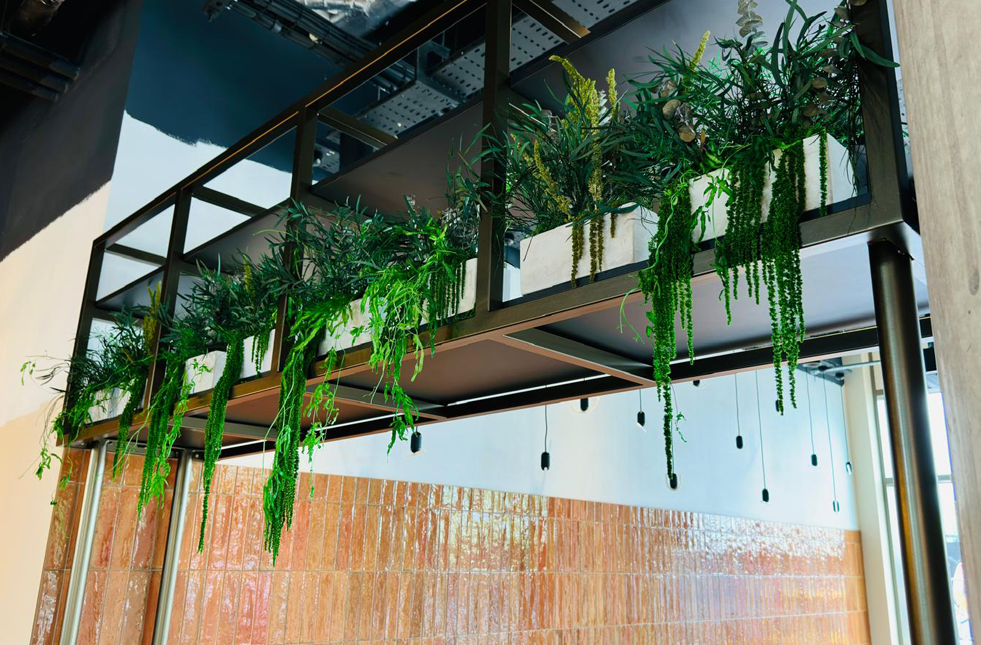
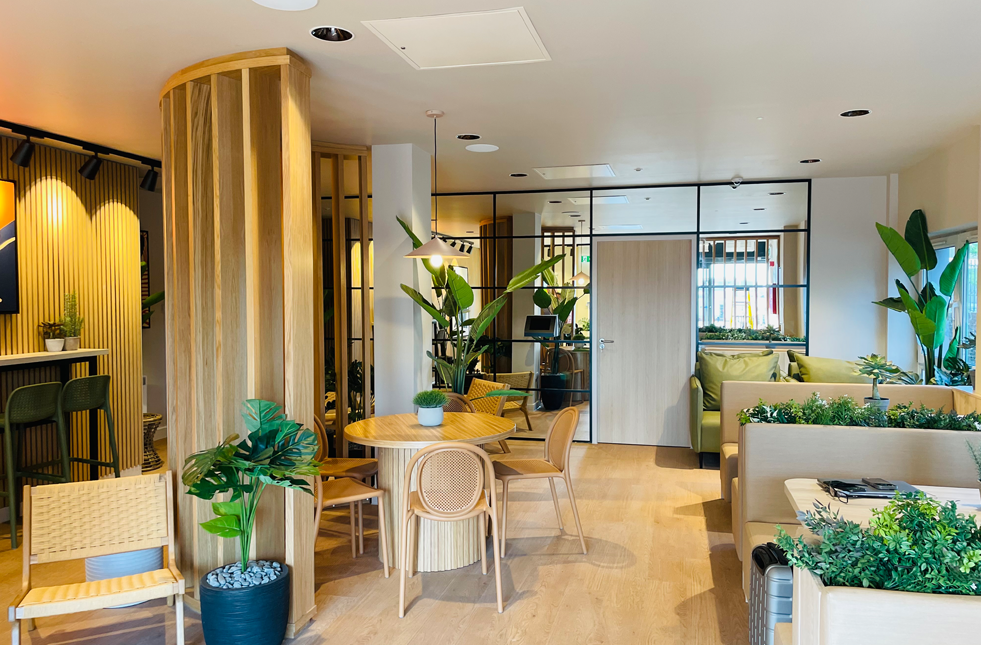
The most effective solution often depends on the specific space and its function. Many modern workplaces adopt a mixed approach. Using real plants where their health and environmental benefits can be maximised, such as work areas, meeting rooms, and break spaces. Artificial plants thrive in locations where environmental constraints make live plants impractical, including windowless rooms, high shelves, or busy reception areas where low maintenance and visual consistency are essential.
By considering both the practical and human factors, organisations can create workplaces that are attractive, functional, and supportive of employee well-being.






Next Steps...
Got a project in mind?
We’re here to help.
Fill in the form below and one of our team will get in touch.